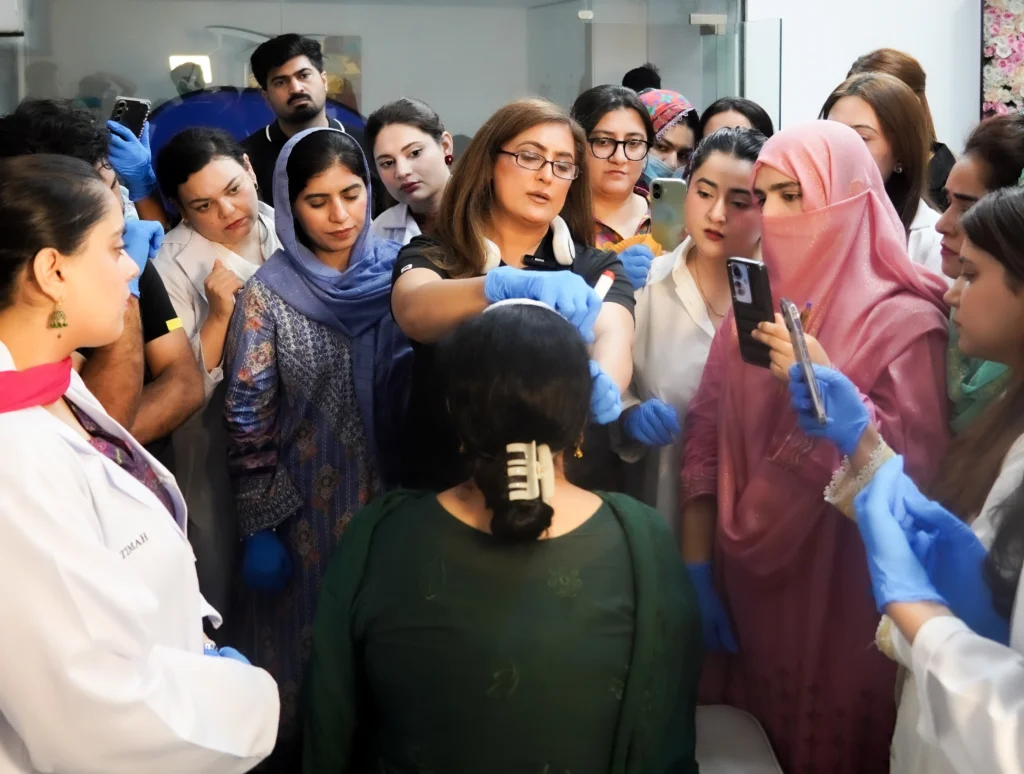
A beautician course is a training program that teaches skincare, facials, hair removal, makeup application, and basic grooming techniques, typically lasting a few weeks to a few months. In Pakistan, beautician courses range from short certificate programs to more advanced diplomas, with career outcomes varying widely depending on the depth of training and the certifying body behind it.
If you’re researching this path, the real question usually isn’t just “what is a beautician course” it’s which level of training actually leads to a sustainable, well-paid career. This guide breaks down exactly that.
Training as a doctor? See our 3-day non-invasive aesthetics course, the 2026 course fees and the aesthetic courses for doctors.
What Is a Beautician Course?
A beautician course covers foundational beauty and grooming services: facials, threading, waxing, basic skincare, makeup application, and sometimes hair styling. It’s typically the entry point into the beauty industry and does not require a medical background.
Core topics usually include:
- Skin types and basic skincare routines
- Facial treatments and cleansing techniques
- Hair removal (threading, waxing)
- Makeup application basics
- Salon hygiene and client handling
This differs from medical aesthetics training, which involves clinically supervised, injectable, and device-based procedures (like Botox, dermal fillers, or HIFU) and is generally restricted to doctors and qualifying licensed professionals due to the medical risk involved.
Beautician Course vs. Medical Aesthetics Training: Key Differences
Factor | Beautician Course | Medical Aesthetics Training |
Eligibility | Open to most applicants, no medical background required | Primarily MBBS doctors (PMDC/PMC-registered); select non-medical professionals |
Techniques Covered | Facials, waxing, threading, makeup | Botox, dermal fillers, microneedling, HIFU, chemical peels |
Certification Level | Local/basic certificate | Internationally recognized, UK-certified diploma |
Earning Potential | Entry-level salon wages | Higher, clinical/cosmetic procedure pricing |
Career Path | Salon beautician, freelance beauty services | Clinic practitioner, aesthetic specialist, clinic owner |
Regulatory Oversight | Minimal | Higher, patient safety protocols, clinical supervision |
The takeaway: a beautician course is a valid starting point, but it has a ceiling. Professionals who want to move into higher-earning, clinically credible aesthetic work eventually need to progress into structured, certified aesthetics training, which is where non-invasive procedure courses come in.
What You Learn in a Standard Beautician Course
Most beautician programs in Pakistan cover:
- Skin analysis fundamentals: identifying skin types and basic conditions
- Facial treatments: cleansing, exfoliation, basic masks
- Hair removal techniques: threading and waxing
- Makeup application: day, party, and bridal basics
- Client consultation etiquette: hygiene standards and salon protocols
These are practical, hands-on skills, but they stop short of the advanced, technology-driven, and injectable treatments that command premium pricing in today’s aesthetics market (skin boosters, microneedling, chemical peels, laser-based treatments, and HIFU skin tightening).
Beautician Course Duration and Fees in Pakistan
Beautician course length and cost vary significantly by institute and course depth, generally ranging from a few weeks for basic certificates to a few months for more comprehensive diplomas. Fees also vary widely based on curriculum depth, brand reputation, and included practical hours.
Because pricing and duration change frequently across institutes, we recommend confirming exact, current figures directly with your chosen training provider before enrolling.
If you’re evaluating your options in Lahore or Islamabad, it’s worth comparing not just the fee, but what’s actually included: hands-on practice hours, certification recognition, and post-course support.
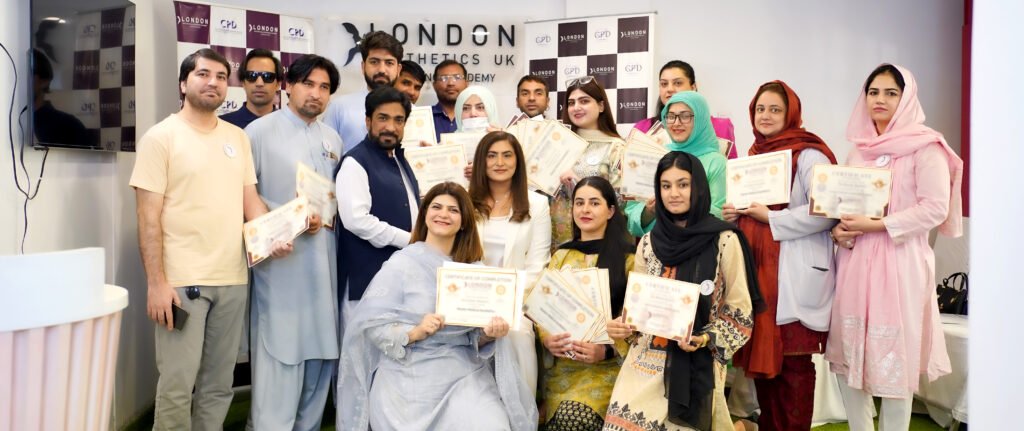
Career Opportunities After a Beautician Course
Graduates of basic beautician courses typically pursue:
- Salon-based beautician roles
- Freelance/home-based beauty services
- Bridal makeup and grooming services
- Entry-level spa positions
These are legitimate career starting points, but many beauticians eventually look to specialize further, particularly as client demand shifts toward more advanced, visible-result treatments like skin boosters, chemical peels, and non-surgical skin tightening.
Why Consider a UK-Certified Aesthetics Path Instead (or Next)
If your goal is a beauty career with higher earning potential, international recognition, and access to advanced non-surgical procedures, it’s worth looking beyond a standard beautician course toward structured aesthetics training.
London Aesthetics U.K. Training Institute, with training and clinic locations in Lahore and Islamabad, offers a non-invasive aesthetics track designed for qualifying non-medical professionals who want to go beyond basic beautician-level skills into:
- Microneedling
- Chemical peels (glycolic, salicylic, lactic, mandelic acid)
- Skin boosters
- 5D HIFU skin tightening
- Pro-Hydra facials and dermaplaning
- BB Glow treatment
The institute is a UK government-registered private limited company, and training is led by Dr. Salma Merritt, Chief Medical Officer and certified UK Master Trainer with over 20 years of medical experience. This gives graduates a certification with international credibility, not just a local salon certificate.
(Invasive procedures such as Botox and dermal fillers remain restricted to MBBS doctors registered with PMDC/PMC.)
Eligibility: Who Can Take These Courses?
- Beautician courses: Generally open to anyone, no formal medical background required.
- London Aesthetics U.K. non-invasive courses: Open to qualifying non-medical professionals meeting the institute’s admissions criteria.
- Invasive/injectable courses: Restricted to MBBS doctors registered with PMDC/PMC.
We recommend contacting the admissions team directly to confirm which track fits your current qualifications.
