
PRP (platelet-rich plasma) has become one of the most requested hair loss treatments in Pakistani clinics. It uses the patient’s own blood, needs no surgery and fits easily alongside medical treatment and hair transplants. This guide is written for doctors: how PRP for hair loss works, which patients do well, a typical treatment protocol and how many sessions patients usually need.
How PRP Works for Hair Loss
PRP is made by drawing a small amount of the patient’s blood and spinning it in a centrifuge to concentrate the platelets in plasma. Platelets release growth factors, and injecting this concentrate into the scalp is thought to support follicles in the growth phase and improve hair thickness. It is most often used for androgenetic (pattern) hair loss in men and women.
Benefits of PRP for Hair
- Uses the patient’s own blood, so allergic reactions are very unlikely.
- Non-surgical with little downtime; most patients return to work the same day.
- Works alongside other treatments, including medical therapy and hair transplants.
- High patient satisfaction in published series: in a 2022 study of 56 patients with pattern hair loss, PRP was reported as safe, with no adverse events (Cureus, 2022).
Who Is a Good Candidate?
- Men and women with early to moderate pattern hair loss and active, miniaturising follicles
- Patients who want to support results before or after a hair transplant
- Patients who cannot use, or want to add to, medical treatment
PRP is less helpful where follicles are already lost, such as long-standing complete baldness, and it is generally avoided in patients with platelet disorders, active scalp infection, anticoagulant therapy or active cancer. Take a full history and set realistic expectations before starting.
A Typical PRP Protocol for Hair Loss
| Step | What doctors typically do |
|---|---|
| Blood draw | About 15 ml of venous blood into a PRP tube or syringe |
| Centrifugation | Spin according to the kit’s instructions to separate platelet-rich plasma |
| Preparation | Collect roughly 5–6 ml of PRP; cleanse and mark the treatment area |
| Injection | Serial injections about 1 cm apart into the affected scalp, at a depth of roughly 3 mm |
| Aftercare | Avoid washing the hair for several hours and avoid strenuous exercise that day |
The volumes, depth and spacing above follow the method described in the 2022 Cureus study; protocols vary between kits and clinics, so always follow the kit’s instructions and your training.
How Many PRP Sessions Are Needed for Hair?
Most published protocols start with at least three sessions at monthly intervals, followed by maintenance sessions at longer intervals depending on the response. Patients usually notice reduced shedding first, with changes in density assessed after the initial course. Standardised before-and-after photographs at each visit help you and the patient judge progress.
PRP vs Mesotherapy for Hair
Mesotherapy injects a prepared cocktail (for example vitamins, peptides or other actives) into the scalp, while PRP uses the patient’s own concentrated platelets. Many clinics offer both and choose based on the patient, budget and response. Both are taught on our PRP and mesotherapy course.
Learn PRP for Hair Loss Hands-On
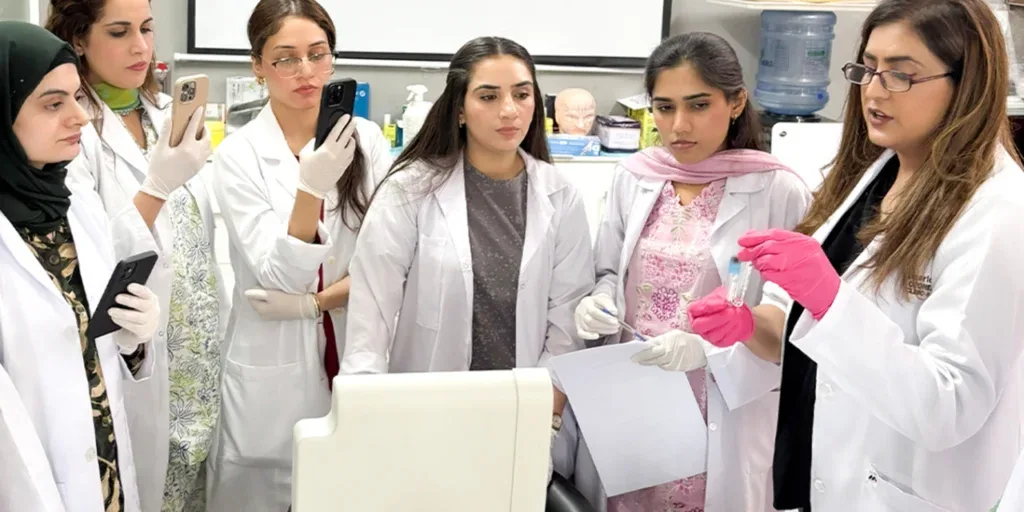
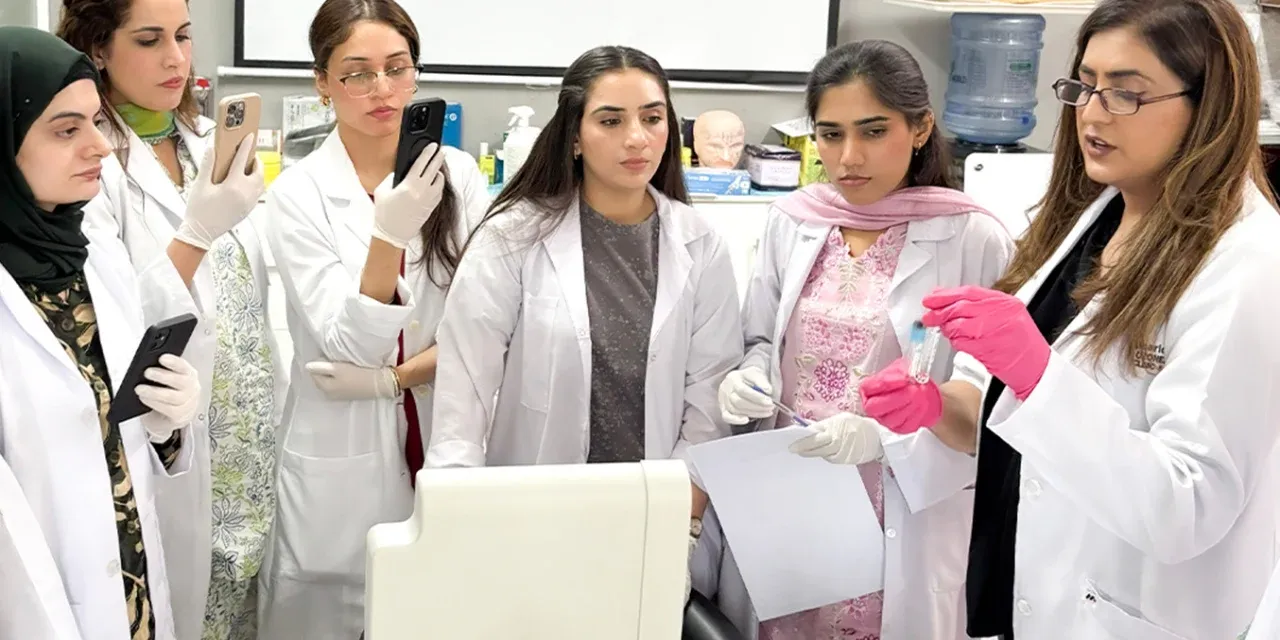
Our PRP course for doctors covers preparation, injection technique and protocols for face and hair, with live-model practice. Doctors who want to offer surgical hair restoration can add our 2-day hair transplant course. For patient pricing questions, see our guide to hair transplant cost in Pakistan.
Frequently Asked Questions
Does PRP work for hair loss?
PRP is widely used for pattern hair loss and published studies report improvements in hair density and high patient satisfaction, although more large controlled trials are needed. It works best when follicles are still present.
How many PRP sessions are needed for hair?
Most protocols start with at least three sessions at monthly intervals, followed by maintenance sessions at longer intervals depending on the patient’s response.
What are the benefits of PRP for hair?
It uses the patient’s own blood, is non-surgical with little downtime, and can be combined with medical treatment and hair transplants.
Who should not have PRP for hair loss?
PRP is generally avoided in patients with platelet or bleeding disorders, active scalp infection, anticoagulant therapy or active cancer. Take a full history first.
Is PRP better than mesotherapy for hair?
They work differently. PRP uses the patient’s own platelets, while mesotherapy injects a prepared cocktail of actives. Clinics often offer both and choose based on the patient.